
Xianfu Du – Reviving the Stories of Ziyang’s Ancient Towns
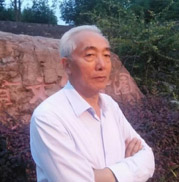
I was born in Ziyang, Szechwan, southwestern China. I explore local heritage, conduct research into tales about famous historic figures and write about them. I wrote three biographical novels about famous Ziyang scholars who lived approximately 2000 years ago. I also initiated the project “Revisiting Ancient Towns in Ziyang” where volunteers (many of whom are local writers and photographers) visited a dozen old towns in Ziyang and documented the towns’ cultural heritage dating from Han Dynasty (200 to 50 BC) to Tang Dynasty (around 700 AD). This project gained public attention and later attracted financial support from the local government.
More about what I do and why
I served in the military for 12 years and then worked as a police officer for over 20 years. However, since childhood my true passion has been for literature and art.While other kids enjoyed having fun climbing a tree or swimming in the pond, I loved to spend a whole day reading ancient Chinese novels at my uncle’s home. In the 1990s, after I left the army and went back to Ziyang, I began my journey of writing on Ziyang’s local heritage. At that time, a variety of foreign literature, from the Soviet Union and elsewhere, began to be widely introduced in China, and through reading, I realized that literature had this character of being “the more local, the more global”. Thus, I decided to base my work on local culture, to be specific, Ziyang’s culture.
[su_expand more_text="More" less_text="Show less" height="24" text_color="#333333" link_color="#d05002" link_align="left" ]
So far, I’ve written and published three biographical novels about three famous ancient scholars in Ziyang. I have made one movie, and one television drama which aired on national TV, its plot is based on Ziyang, as well as writing 23 articles on Ziyang’s intangible cultural heritage, such as porters’ songs, traditional recipes, and the lion dance on a table tower. The so-called lion dances are still very popular. At wedding feasts, for example, lion dancers are invited to perform on a stack of tables to entertain the guests. In the couples’ backyard, 5 to 7 square tables are stacked one on top of the other, and then the “lion” (two performers wearing a huge colorful costume of this animal) climb up to the top, where they dance and jump in joy for the newly married couple.
Last year, as the chief writer of one of the local newspapers, I initiated the project “Revisiting Ancient Towns in Ziyang”, where local writers and photographers were invited to explore old towns in Ziyang during the weekends and write about them for the local media. Our publication gained extensive social media attention and later attracted government sponsorship, which enabled us to extend our exploration to more than 20 towns.
[/su_expand]
What I’ve learned
People no longer pay much attention to cultural heritage, especially intangible cultural heritage, because our way of living is changing. TV and movies replace traditional operas, quick and instant food threatens the authority of complex ancient recipes, pop music is preferred to local “outdated” songs. Rather than digging out and preserve the traditions by documenting them, it is more important to find ways to revive the ancient cultures by promoting appreciation of cultural heritage through creative ways, such as utilizing social media and infusion with modern pop culture.
[su_expand more_text=”More” less_text=”Show less” height=”24″ text_color=”#333333″ link_color=”#d05002″ link_align=”left” ]
My advice to other citizen historians is: befriend people from all walks of life, because they can help you in unexpected ways. By leveraging my network at local media and government, our project was able to gain more public attention and financial support. I feel more fulfilled in this sense, as cultural heritage protection is no longer just a personal hobby, but a greater cause that other people and the next generation can carry forward.
[/su_expand]
How I work
What do they carry? Why wouldn’t they use the cart? And what do they sing about? In this video, I interview elderly porters to get the answers. A group of eight gathered to sing the Yishanhaozi (“Mountain Moving Song”) for me. Roads, usually dirt roads, did not lead everywhere, so sometimes, it was just impossible to employ a cart to carry a 100kg pig from Mr. Zhang’s house to the market. Sometimes, when Mrs. Wang needed to refurbish her stable, porters were hired to stack the stones for a new wall. Other times, hiring porters just showcased the prestige of the family: up to 64 porters could be hired to lift the coffin of a rich person. While they marched towards the graveyard, the porters would also sing loud sad porter songs for the whole village to hear. The content of the song changed according to the occasions, and most of the time, porters sang about their children and wives, or about the delicious food and warm bed that were waiting for them after the hard work was done After their performance of the song, the porters invited me to come again and visit them when they were doing their actual work in the fields.Connect with me
[su_expand more_text=”More” less_text=”Show less” height=”24″ text_color=”#333333″ link_color=”#d05002″ link_align=”left” ]
* In the past, at the countryside of Szechwan, southwestern China, people used their own physical strength to carry heavy objects. Up and down the hills and the streams, the porters sang the Tai Jiang songs (“porter songs”) to coordinate their pace and alleviate their weariness.
[/su_expand]