
Every place has histories: Interpretation, education, and memory at Ford’s Theatre
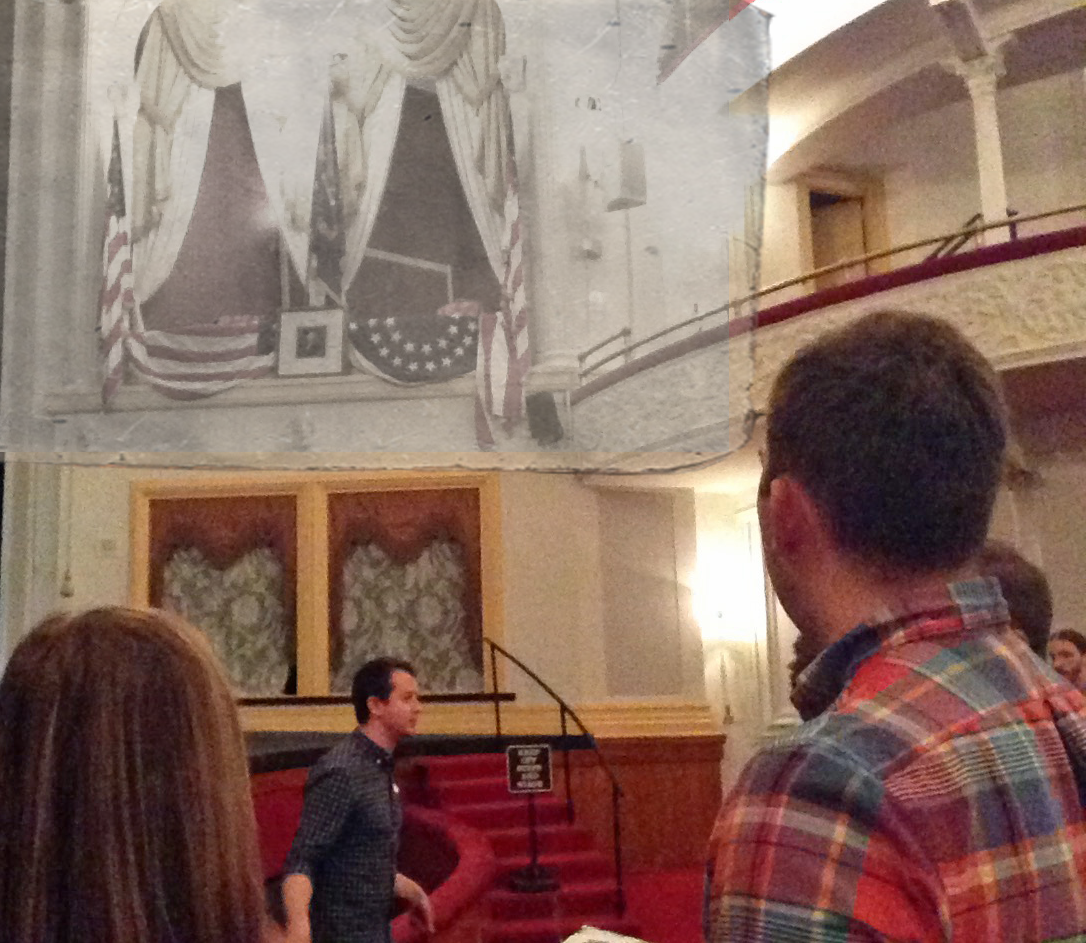
Guest Post: Hannah Clevenger, University of Memphis
When I arrived at the historic Ford’s Theatre, to attend their first young professionals after-hours event of the year, I realized that this theater was one of the few places not yet checked off my DC must-visit list. When other guests began arriving and we began to mix and mingle in the theater’s lobby, I realized that this wasn’t going to resemble an ordinary visit to a museum, historic house, or other cultural site. Although the group of attendees was fairly large, it paled in comparison to the number of people that make up a full house at Ford’s on any given night, and people soon went off to explore on their own or in small groups.
We were given the opportunity to explore and learn about the main theater and its engaging basement museum for almost two hours, talking to museum staff and National Park Service members who brought the history of Ford’s Theatre, and its many transformations over the years, vividly to life. Reading first-hand accounts of the people who had experienced the terrible night of President Lincoln’s assassination, and learning how succeeding generations tried to relate to the physical location of the event, I was reminded of something vital in regards to how we might view cultural heritage in the present day.
With only a cursory glance, a historic site like Ford’s Theatre seems to have only two stories to tell:
How it became the site of one of the most famous acts of violence in America’s history, and
How it stands today, organized and lovingly restored as a window into how the space was arranged and experienced by the people who knew it during its first years as a theater.
However, learning about its transformation from theater, to crime scene, to government offices, and eventually back to theater, I saw that a twenty-twenty hindsight view of the theater was far too simple. I remembered how important it is to recall and learn about how a historic site or any piece of cultural heritage can take on a unique identity and significance, form both its time in history and the particular groups that interact with it. If that effort can be made, I think that it forms an essential component of working together to learn about and protect cultural heritage of all types both now and in years to come.
Learn more about Ford’s Theatre and their events, programs, and performances throughout the year: https://www.fords.org/
-
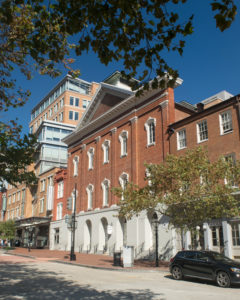
- A lot has changed since Ford’s first days as a theater in 1861. Surrounded by the present-day crowds and commerce of DC, Ford’s Theatre commemorates its various roles in both the past and the present. (Wikimedia Commons)
-
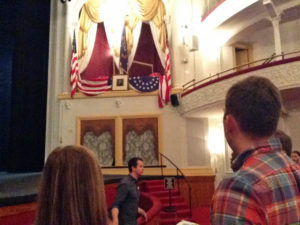
- A view of the box where President Lincoln was shot, restored as it would have looked on that night, while learning about the history and different identities of the building itself through the years.
-
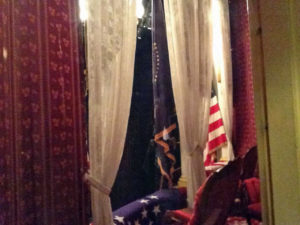
- Even seen through glass and in low lighting, being this close to President Lincoln’s theater box evokes so many emotions.
-
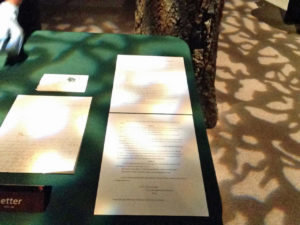
- The original letter and transcription from the young man in whose boarding house room President Lincoln spent his final hours. Even in the trauma and immediacy of his present, the young man was fully aware of its long-lasting “historical importance.”
-
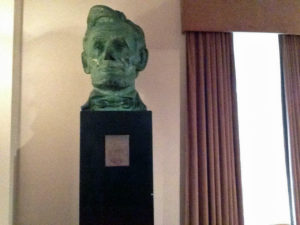
- A very large bust of President Lincoln stands silently, keeping vigil from the back of the second-floor balcony.
-
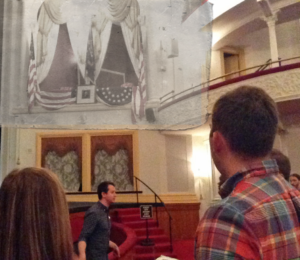
- Blending the visuals of the past and the present; tintype background courtesy of Robert Berdan (http://www.canadiannaturephotographer.com/newold.html).